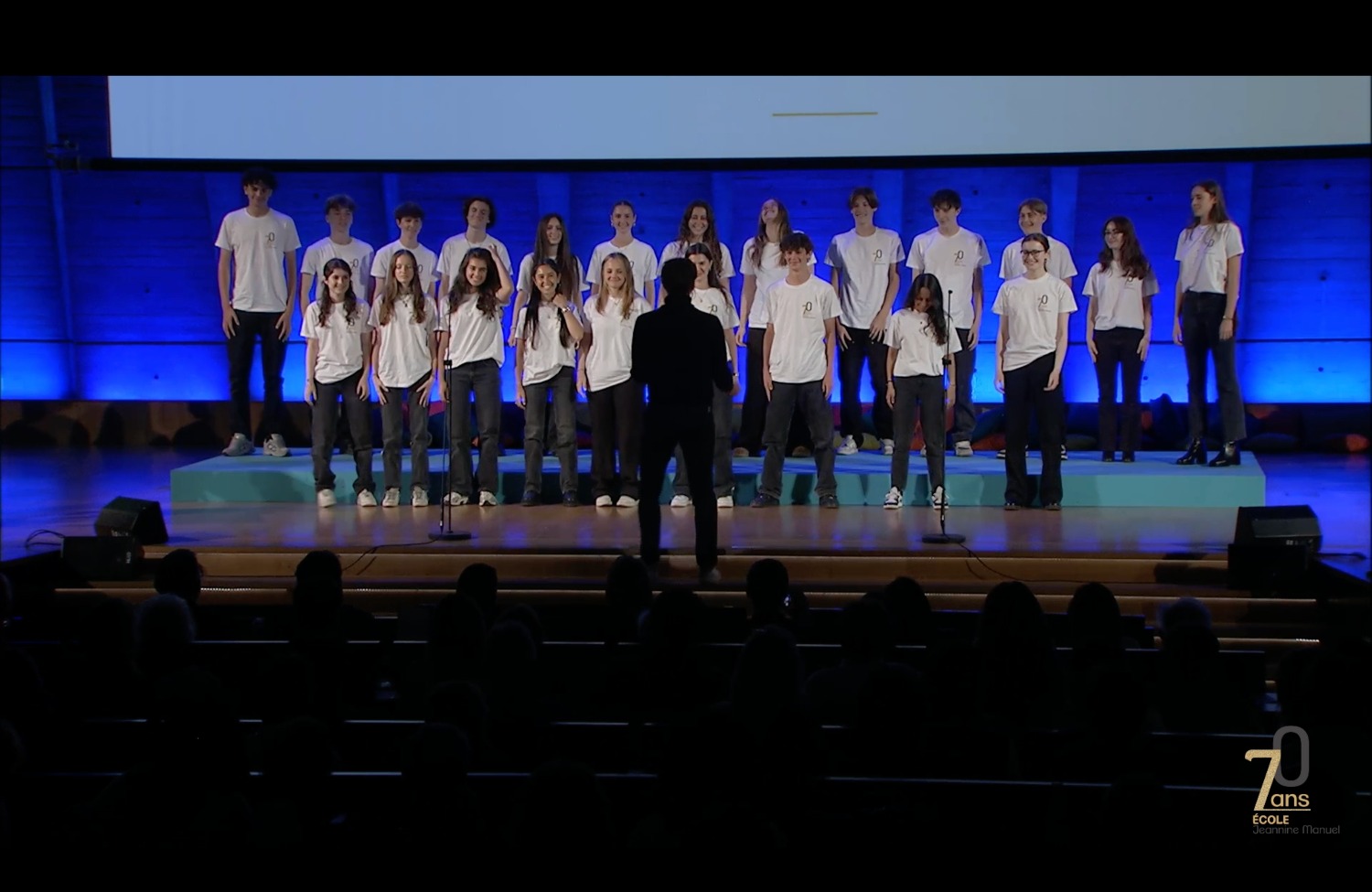


The International Youth Choir is currently structured around two age groups in two different locations in Paris. One group brings together children aged six to eight, while the other welcomes singers between nine and eleven years old. Each group rehearses separately, allowing the sessions to be adapted to the children’s age, attention span, and vocal development.
Weekly rehearsals last between one hour and one hour and fifteen minutes. Each session is led by two teachers: one directing the choir and one accompanying on the piano. This setup allows the work to remain fluid and responsive, with constant musical support and attention to the group dynamic.
Every rehearsal begins with a vocal warm-up. These moments are designed to develop singing skills and breathing, but also to explore sound in a playful way. Children are encouraged to discover what their voices can do, often inventing words or sounds as part of the exercises. These warm-ups are lively, imaginative, and help set a relaxed, focused atmosphere for the rest of the session.
Harmony is introduced early through layering exercises. Children sing different lines simultaneously, learning to listen closely and adjust instinctively to one another. At this stage, the work is entirely oral. No written music is used. Listening, memory, and collective awareness are at the center of the learning process.
The repertoire is always multilingual. Songs are sung in English and French, with music itself forming a third language. Each season includes an original composition project developed as a group, alongside songs drawn from jazz, pop, rock, and blues. Classical music also plays an important role. Children learn and sing melodies from opera, solo piano works, chamber music, and choral repertoire.
To help these melodies stay alive, the choir invents words to fit the music. This process is joyful and deeply effective. Children often remember these melodies for years because they are linked to the words they created together. So far, the choir has sung melodies by composers such as Vivaldi, Mozart, and Shostakovich in this way.
Time is also made for individual voices. When a child wishes to sing alone, the group listens, and the moment becomes a shared learning experience. This balance between collective work and individual expression lies at the heart of how the choir functions.
Explore Our Latest Insights
Dive into our recent articles and updates.